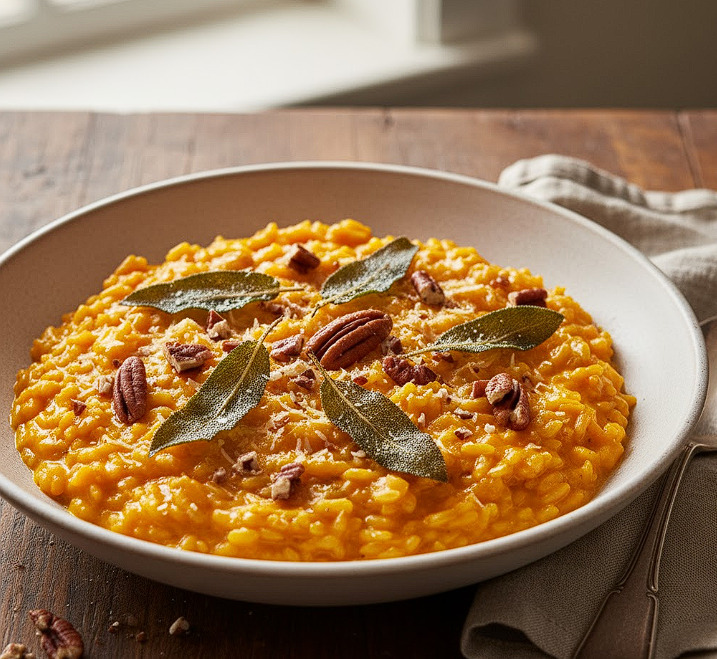
Few dishes embody seasonal comfort and rustic elegance quite like Risotto. It is the culinary equivalent of sinking into a velvet sofa next to a crackling fire—warm, rich, and profoundly soothing. When paired with the deep, earthy sweetness of Butternut Squash and the fragrant, herbal bite of sage, the result is a truly spectacular, defining meal for the cooler seasons.
For the Cozy Crafted kitchen, making risotto is not just cooking; it’s a meditative act. It requires patience, attention, and stirring, which serves as a calming ritual at the end of a busy day. The reward? A velvety, vibrant dish that looks and tastes far more complex than the sum of its parts.
This comprehensive guide will provide you with the Creamy Butternut Squash Risotto Recipe guaranteed to deliver an authentic, al dente texture and a rich, velvety consistency. We’ll cover the critical secrets—from roasting the squash to the proper stirring technique—ensuring your result is perfect, impressive, and instantly cozy.
THE SCIENCE OF VELVET: MASTERING RISOTTO TEXTURE
The main goal of any risotto is the mantecatura—the final, vigorous stirring that creates the dish’s signature creamy, almost liquid texture. This velvet consistency is achieved by understanding the starch content of the rice.
Choosing the Right Rice
You must use a short- to medium-grain rice with high amylopectin (soft starch) content. Arborio rice is the most common and forgiving, but Carnaroli is the premium choice, as it holds its shape better (al dente) while releasing a higher amount of starch, resulting in a silkier finish. Do NOT rinse the rice! You need that exterior starch.
The Roasting Secret
The sweetness of the butternut squash is best unlocked through roasting, not boiling.
- Pre-Roasting: Cut the squash, toss it with olive oil, salt, and pepper, and roast until tender. This concentrates the flavor and dries out the squash slightly, allowing it to incorporate into the rice seamlessly without making the risotto watery.
The Importance of Hot Stock
The chicken or vegetable stock must be kept piping hot in a separate saucepan throughout the entire cooking process. Adding cold stock will drastically cool the rice, stopping the starch release and ruining the cooking rhythm, resulting in a gluey, non-creamy texture.
RECIPE: CREAMY BUTTERNUT SQUASH RISOTTO
This recipe is designed for maximum flavor depth and classic, velvety texture.
Yields: 4 servings | Prep time: 20 minutes | Cook time: 40 minutes
Ingredients
- 2 cups Butternut Squash, diced and roasted (reserve 1/2 cup for garnish)
- 6 cups Low-Sodium Chicken or Vegetable Stock (kept hot)
- 4 Tablespoons Unsalted Butter, divided
- 2 Tablespoons Olive Oil
- 1 large Shallot, finely minced
- 1 ¹/² cups Arborio or Carnaroli Rice (unrinsed)
- 1/2 cup Dry White Wine (e.g., Pinot Grigio)
- 1/4 cup Freshly Grated Parmesan Cheese, plus more for garnish
- 2 Tablespoons Heavy Cream (Optional, for extra richness)
- 10 Fresh Sage Leaves (for frying and garnish)
- 1/4 cup Toasted Walnuts or Pecans, chopped (for garnish)
- Salt and Freshly Ground Black Pepper to taste
Instructions
- Roast Squash: Preheat oven to 400°F (200°C). Roast squash with olive oil, S&P until tender. Reserve 1/2 cup diced and purée the remaining squash with a ladle of hot stock until smooth.
- Fry Sage: Heat 2 Tablespoons of olive oil in a small pan. Fry sage leaves until crispy (about 30 seconds). Remove, drain on paper towel, and reserve.
- Soffritto: In a wide, heavy-bottomed pot or Dutch Oven (ideal for heat retention), melt 2 Tbsp of butter with 2 Tbsp of olive oil. Sauté the shallots until translucent (4-5 minutes). Dutch Oven, The Timeless Touch: Finding the Best Enameled Cast Iron Pot
- Tostatura: Add the rice to the pot and toast for 2 minutes, stirring constantly until the edges of the grains become translucent.
- Deglaze: Add the white wine and cook, stirring, until completely absorbed.
- The Stirring Ritual: Add the hot stock, one ladle at a time, stirring constantly until the liquid is almost completely absorbed before adding the next ladle. This releases the starch. Continue for about 20 minutes, until the rice is al dente (cooked through but still firm to the bite).
- Mantecatura (The Finish): Remove the pot from the heat. Stir in the roasted squash purée, the remaining 2 Tbsp of cold butter (cut into cubes), and the 1/4 cup of Parmesan. Stir vigorously for 2 minutes to emulsify and create the velvety creaminess. If needed, stir in the heavy cream.
- Serve: Serve immediately, topped with the reserved roasted squash, fried sage leaves, and toasted nuts.
COOKING SECRETS FOR A GOURMET RESULT
Achieving perfection requires attention to a few key techniques often overlooked by home cooks.
The Cold Butter Trick
Adding cold butter at the mantecatura stage is essential. The cold fat emulsifies with the hot starch, creating a richer, smoother, and glossier finish than if you were to add melted butter. This is a non-negotiable step for velvet texture.
Al Dente is Key
Overcooked risotto becomes mushy and dense. The grain should retain a tiny, firm bite in the center. Taste the rice frequently during the last 10 minutes of the stirring process.
The Finishing Garnish
The contrast is critical for balancing the comfort food. The bitterness of the fried sage and the crunch of the toasted nuts cut through the richness of the creamy rice and cheese, making the dish more complex and satisfying.
Fragrant, herbal bite of sage.

COZY WINE PAIRING AND ATMOSPHERE
Risotto is an elevated dish that calls for a mindful atmosphere and a complementary pairing.
Wine Pairing
- Cooking: Use a crisp, dry white wine like Pinot Grigio or Sauvignon Blanc for the deglazing step.
- Serving: Pair the finished dish with the same wine used in the cooking process, or opt for a light, fruit-forward red like a Beaujolais or an Italian Valpolicella.
The Cozy Ambiance
This is an ideal meal for a cool evening at home. Dim the overhead lights, use soft table lamps, and serve the risotto family-style directly from the cooking pot (if it’s beautiful, like a Dutch Oven) or transfer it to a large, rustic serving bowl. Dim the overhead lights, The Ambiance Architect: Finding the Best Aesthetic Smart Lighting.
An Italian culinary school that details the proper technique for mantecatura.
BUTTERNUT SQUASH VARIATIONS AND STORAGE
This recipe is flexible and can be adapted for year-round comfort.
Seasonal Swaps
- Summer: Swap the squash for sautéed asparagus and lemon zest.
- Winter: Swap the squash for roasted mushrooms (like wild porcini) or sun-dried tomatoes.
Storage and Reheating
Risotto is best eaten immediately. Stored leftovers lose their creamy texture as the rice continues to absorb liquid.
- Reheating Trick: To revive leftovers, place the refrigerated risotto in a saucepan, add a splash of stock or water, and stir gently over low heat until it loosens up again. Stir in a little extra grated Parmesan just before serving to re-emulsify the creaminess.
Making it Vegetarian
Simply use a high-quality vegetable stock instead of chicken stock, and ensure your Parmesan cheese is made without animal rennet.
CONCLUSION: THE RITUAL OF COMFORT
Mastering the Creamy Butternut Squash Risotto Recipe elevates your home cooking repertoire and provides a profound sense of cozy accomplishment. The time invested in the rhythmic stirring ritual is rewarded with a dish of rich, velvety warmth that truly tastes like the season.
Embrace the process, trust the mantecatura, and enjoy the sophisticated comfort of a homemade Italian classic.
What will you use to garnish your first perfect batch of risotto: crunchy toasted walnuts or delicate fried sage leaves? Share your plan below!